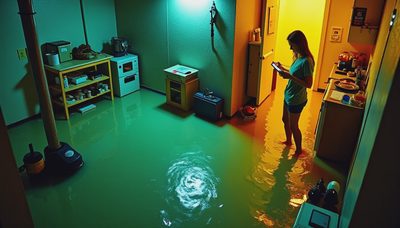
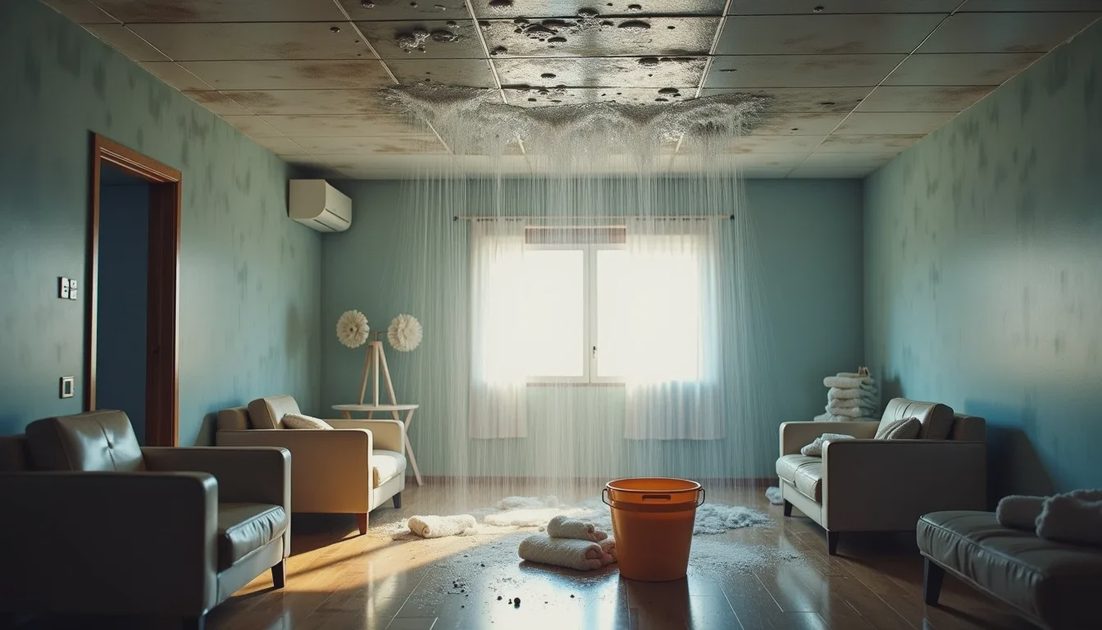
Water is now inside the house. The storm may still be fading or the next band of rain may be hours away. What happens in the next day largely determines whether the loss stays limited to the original roof damage or expands into ceilings, insulation, flooring, and mold. The response required is not complicated, but it is specific. Certain actions protect the property and the claim. Others create safety risks or weaken the documentation the insurer will later need.
Immediate Safety Priorities
Before any cleanup or documentation, address hazards.
Electrical Risk
If water is near light fixtures, ceiling fans, outlets, or the electrical panel, shut off power to the affected area at the breaker only if you can do so without standing in water. Do not touch switches or fixtures that are wet. Treat any uncertainty as a reason to keep the circuit off until a professional evaluates it.
Structural Warning Signs
Sagging or bulging ceilings, new cracks in walls near the roofline, or audible creaking indicate possible structural stress. Clear people from those areas. A ceiling that is holding a large volume of water can collapse without much additional warning.
Exterior Hazards
Stay away from downed power lines. Do not climb onto a wet, debris-covered, or visibly damaged roof. Temporary access belongs to people with proper equipment and training once conditions are stable.
Contain the Water Inside
The first practical goal is to stop water from spreading across finishes and contents.
Catch and Direct
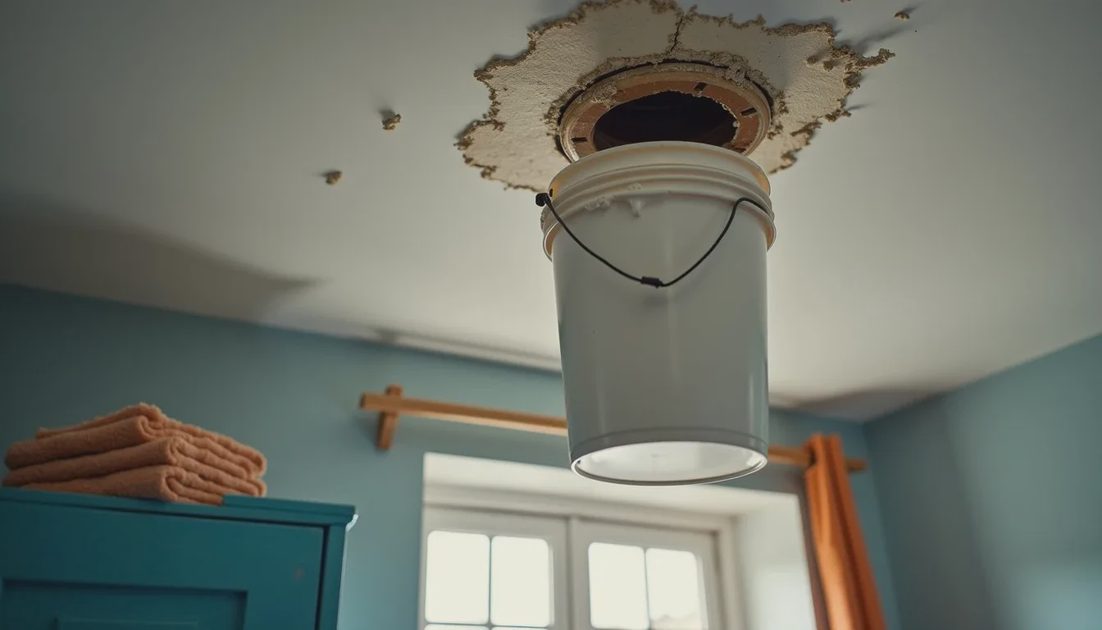
Place buckets, trash cans, or large containers directly under active drips. For wider damp areas, plastic sheeting can funnel water toward a single collection point. Empty containers before they overflow.
Relieve Ceiling Pressure
When a ceiling bulge is filling with water, carefully puncture the lowest point with a screwdriver or similar tool while holding a bucket underneath. Stand to the side and protect your eyes. Controlled release is almost always better than an uncontrolled collapse of saturated drywall.
Protect Contents and Floors
Move furniture, electronics, documents, and rugs away from the wet zone. Towels and additional plastic help limit migration into adjacent rooms. Wet carpet and padding should be addressed as soon as practical; prolonged saturation drives mold growth and secondary damage.
Document Before You Alter Anything
Insurance and later contractor discussions depend on a clear record of conditions immediately after the event.
What to Capture
Wide shots of each affected room showing the overall pattern of water
Close-ups of stains, drips, and any active flow
Attic views (if safe) showing wet insulation or staining on the underside of the deck
Exterior views of the roof area above the leak, even from the ground
Any debris that struck the house and the date/time you first noticed water
Timestamps and multiple angles are useful. Do not discard damaged materials until they have been photographed; they can support the claim.
Keep Receipts
Any temporary materials—tarps, plastic, towels, fans, dehumidifier rental—should be receipted. Most policies cover reasonable emergency mitigation costs. Those receipts become part of the claim file.
Temporary Protection Versus Permanent Repair
The distinction matters both for safety and for the claim.
What Temporary Measures Look Like
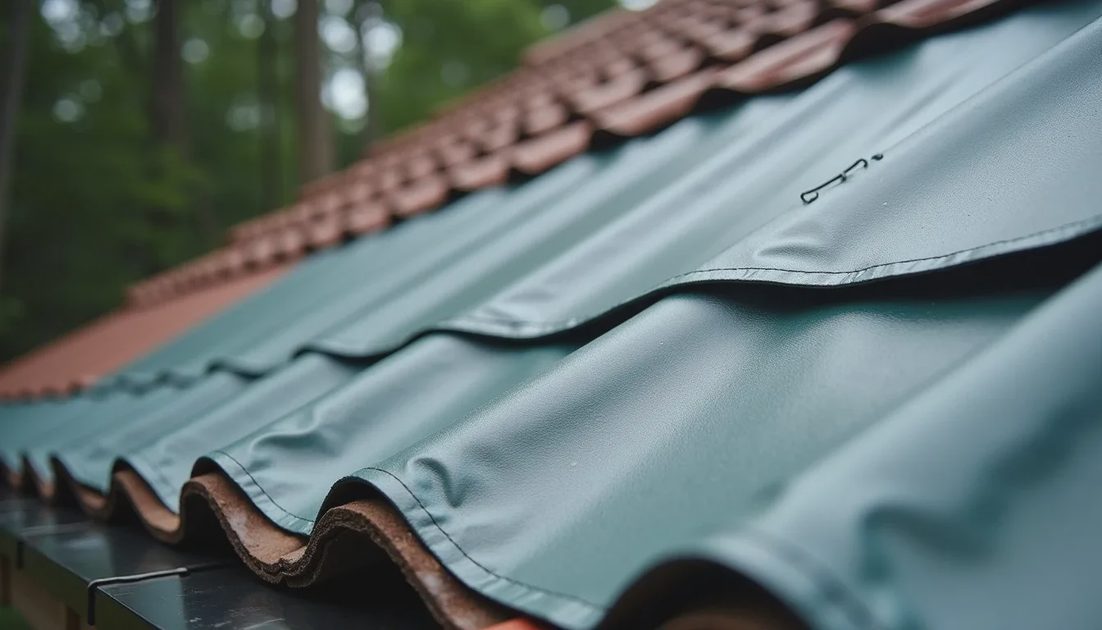
Professional tarping or board-up that covers the damaged roof area, extends well beyond the opening, and is properly secured stops further water entry. Interior fans and dehumidifiers begin the drying process. These steps are expected mitigation.
What to Avoid in the First 24 Hours
Do not begin permanent roof repairs, full tear-off, or interior reconstruction before the damage has been documented and, in most cases, before the insurer has had a chance to inspect. Permanent work that destroys evidence of the original condition can complicate or reduce the claim. Temporary protection preserves the house without erasing the record.
What Not to Do
Certain common impulses increase risk or weaken the file.
Climbing onto a wet or damaged roof in the dark or during residual wind
Using open flames or candles for light in damp areas
Assuming a small stain is finished and ignoring the attic above it
Throwing away wet materials before photographing them
Authorizing major permanent work solely on a verbal promise that “insurance will take care of it”
Waiting multiple days to report a clear storm-related leak while water continues to enter
Mitigation is required. Premature permanent repair is not. The difference protects both the house and the claim.
Communication Sequence in the First Day
Once the immediate interior is stable and documented:
Contact a local contractor experienced in emergency tarping if the roof is still open to weather.
Notify the insurance carrier promptly, obtain a claim number, and ask how emergency expenses should be submitted.
Keep a simple written log of times, actions taken, and people spoken with.
The goal of the first day is not to solve the entire restoration. It is to stop the damage from expanding, to create a reliable record, and to start the formal processes that will fund the proper repair.
Practical 24-Hour Checklist
Hours 0–2
Confirm safety (electrical, structural, exterior hazards)
Move people and pets out of high-risk zones
Begin water containment with buckets and plastic
Hours 2–6
Photograph all interior and accessible exterior evidence
Move contents and protect floors
Relieve any dangerous ceiling bulges
Hours 6–24
Arrange professional temporary roof protection if needed
Start drying with fans or dehumidifiers
Report the claim and organize receipts and notes
Avoid permanent repairs that alter the original damage
The first day sets the trajectory. Controlled containment, thorough documentation, and restrained temporary measures keep secondary damage low and keep the claim file clean. Unsafe access and premature permanent work do the opposite. Act deliberately, record what you see, and bring qualified help in for anything that requires leaving the ground or opening the roof structure. That sequence turns an emergency into a manageable restoration rather than a cascading loss.