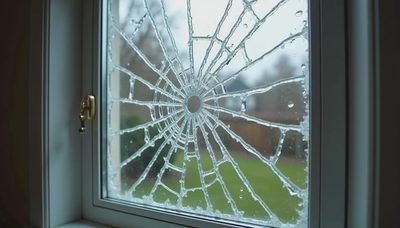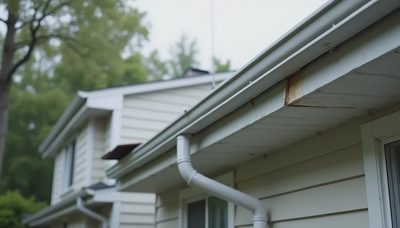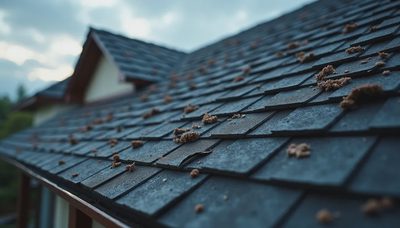
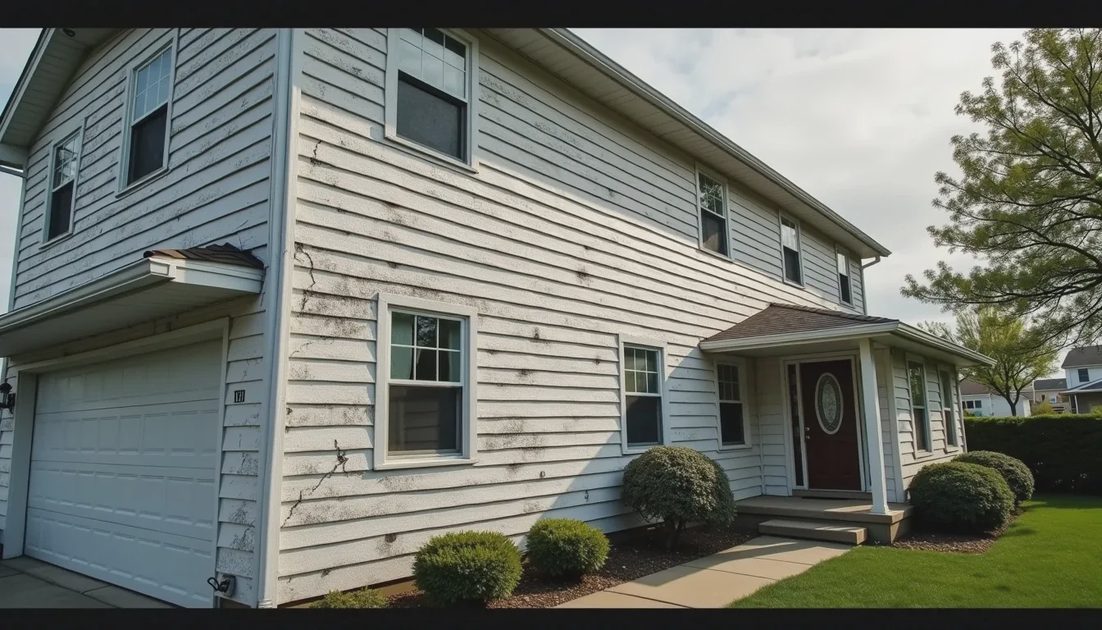
Hail and wind leave siding looking uneven: circular dents, edge cracks, fractured panels, or loosened courses. The first estimate many homeowners receive covers only the most obvious damaged sections. That limited scope often undervalues the loss. The real decision turns on damage density, material matching, substrate condition, and whether a partial repair can restore a reasonably uniform, weather-tight exterior.
How Storm Damage Affects Different Siding Materials
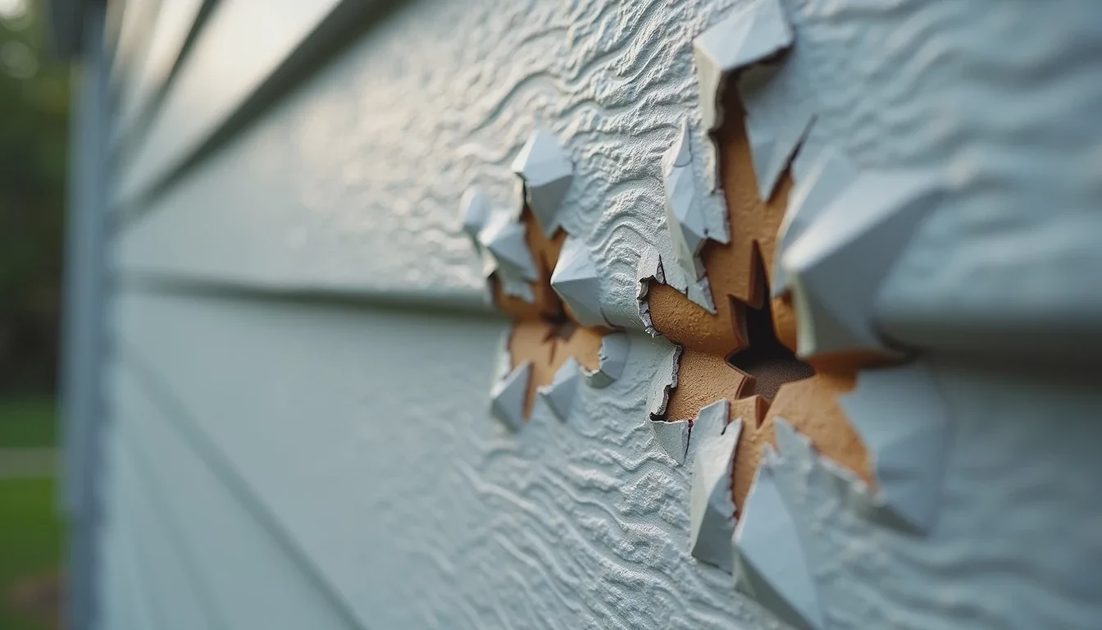
Vinyl is the most common residential cladding and the most vulnerable to visible hail marks. Impacts create bruises, cracks, or punctures. Cold-weather storms make vinyl more brittle, so the same size hail that dents aluminum can fracture vinyl. Once a panel cracks through the interlock, water can track behind the course.
Fiber-cement planks resist impact better but still chip, crack, or lose edge integrity under larger stones. The factory finish can be compromised, and cut edges require proper sealing. Aluminum and steel dent cleanly; the dents rarely affect weather resistance but create an obvious visual problem that matching rules often address. Wood and engineered-wood products can split, delaminate, or lose protective coatings at impact points.
Damage is rarely uniform. Storms typically hit one or two elevations harder. West and northwest walls often show the densest pattern in many regions. Adjusters who inspect only the most obvious wall and write a short list of panels miss the broader density and the matching problem that follows.
When Section Repair Is Still Viable
Targeted panel or section repair works when three conditions line up. The damage is truly isolated—usually under 10–15 percent of a single elevation. Matching material is still manufactured in the same color, profile, and thickness. The substrate and weather-resistive barrier behind the damaged area remain dry and intact.
In those cases a skilled crew can unlock the interlock with a zip tool, remove the damaged courses, install new panels, and re-secure the system without opening large sections of wall. Cost stays relatively low. Disruption is limited. The finished wall still reads as one continuous surface.
This path is most realistic on newer installations (under 8–10 years for vinyl) where UV fade has not yet created a noticeable color shift and the product line remains active. Fiber-cement modular planks are also more repair-friendly when only a few boards are affected and the finish can be matched or field-painted.
When Full-Wall or Full-Elevation Replacement Becomes Necessary
Several factors push the scope beyond isolated panels.
Damage density is the first. When impact marks or fractures appear across a large percentage of an elevation—commonly cited industry thresholds sit around 25–30 percent of the wall face—piecemeal replacement becomes inefficient and leaves weak points. Manipulating aged vinyl often cracks adjacent panels that looked intact from the ground.
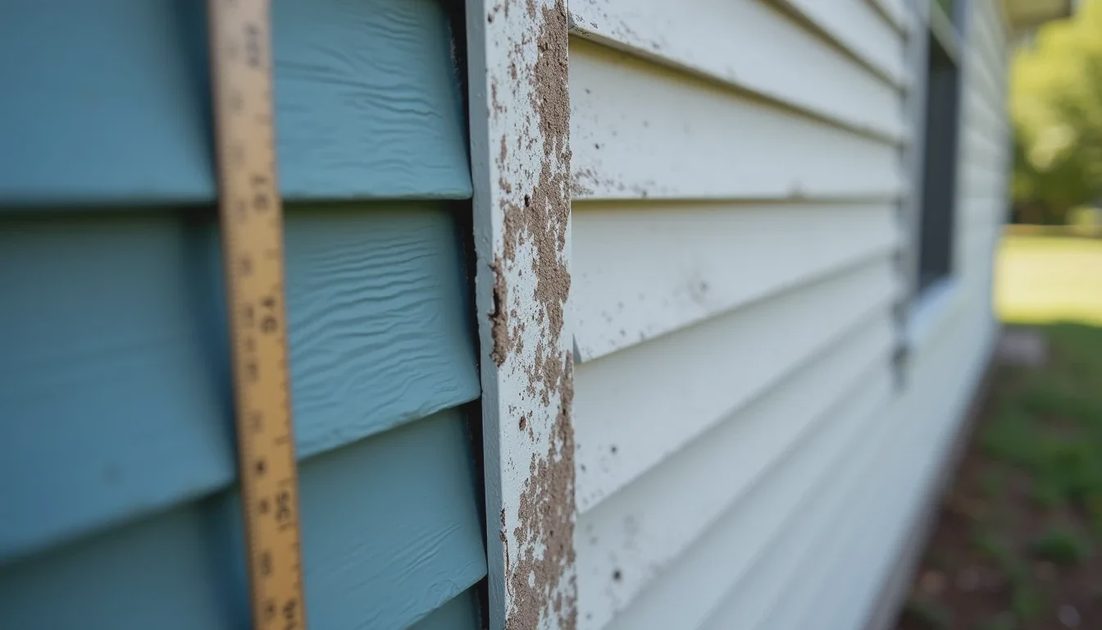
Matching failure is the second and most frequent driver of larger scopes. Vinyl colors fade under UV exposure. Even the same manufacturer’s current stock rarely matches five- or ten-year-old installed panels. Discontinued profiles or color lots make exact matches impossible. Many policies and a substantial number of state regulations require the insurer to restore a “reasonably uniform appearance.” When a partial repair would leave a visible two-tone wall from normal viewing distance, the carrier’s obligation expands to the full elevation or, in stronger matching jurisdictions, the continuous exterior surface.
Substrate condition is the third. Hail severe enough to crack siding can also breach housewrap or wet the sheathing. Soft or delaminated OSB under even a few panels turns a surface repair into a wall-assembly repair. Once the weather-resistive barrier is compromised, leaving adjacent undamaged siding in place can trap moisture.
Code and permitting triggers sometimes appear as well. Large enough replacement areas on older homes can require updated fastening, flashing, or continuous insulation details that make partial work non-compliant.
Decision Factors at a Glance
Factor | Favors Section Repair | Favors Full Elevation / Wall Replacement |
|---|---|---|
Damage extent | Isolated panels, <15% of elevation | Dense impacts or fractures across 25%+ of elevation |
Material age & condition | Newer, flexible, minimal fade | Older, brittle, or already faded |
Matching availability | Current color/profile still produced and close match | Discontinued or noticeable color/gloss difference |
Substrate & WRB | Dry, intact behind damaged area | Soft sheathing, breached wrap, or moisture signs |
Visual result | Repair blends from normal viewing distance | Patch will be obvious from street or sidewalk |
Insurance posture | Limited scope with available match | Matching rules or functional loss support larger scope |
How Adjusters Typically Undervalue the Loss
Field adjusters work under guidelines that favor the lowest cost that appears to restore pre-loss condition. They count the most obvious cracked or missing panels, write a short materials list, and move on. They may note “cosmetic” dents on vinyl or aluminum and exclude them under cosmetic-damage endorsements. They rarely pull samples for manufacturer confirmation of availability. They seldom probe multiple locations for substrate moisture on the first visit.
The result is an estimate that covers a handful of panels while leaving the elevation looking patched and the long-term weather resistance uncertain. Homeowners who accept that estimate without further documentation often discover later that the new panels stand out, adjacent courses crack during installation, or water eventually appears behind the wall.
Building the File That Supports Accurate Scope
Photograph every elevation in consistent daylight before any temporary covering. Capture wide shots that show density patterns and close-ups with scale (a coin or ruler) of individual impacts, cracks, and edge separations. Note soft-metal evidence on gutters, downspouts, and vents as corroboration of storm intensity. If possible, have a contractor remove one or two damaged panels in the presence of the adjuster so the condition of the housewrap and sheathing can be observed and photographed.
Request written confirmation from the manufacturer or distributor that the exact color and profile are discontinued or that current stock will not match weathered material within normal viewing distance. Side-by-side sample photos under the same light are persuasive. Document any pre-existing fade separately so the carrier cannot attribute the entire mismatch to age rather than the impossibility of a storm-related repair match.
Ask the adjuster explicitly how the estimate treats matching requirements under the policy and applicable state rules. Request that the scope address functional loss (opened interlocks, compromised weather plane) rather than surface appearance alone.
Practical Path Forward
Inspect the full exterior, not just the wall that looks worst. Separate true functional damage from pure surface marks. Confirm whether matching material exists. Probe for substrate issues on the most affected elevations. Then compare the cost and performance of a clean section repair against a full-elevation replacement that restores uniform appearance and weather resistance.
If the damage is limited, the material matches, and the wall behind is sound, a precise section repair is efficient and appropriate. When density is high, matching fails, or the substrate is compromised, limited panel work undervalues both the immediate loss and the long-term integrity of the exterior. In those cases the correct restoration is the full wall or elevation—supported by documentation that forces the claim to reflect the actual condition of the home rather than the most convenient short list of panels.