
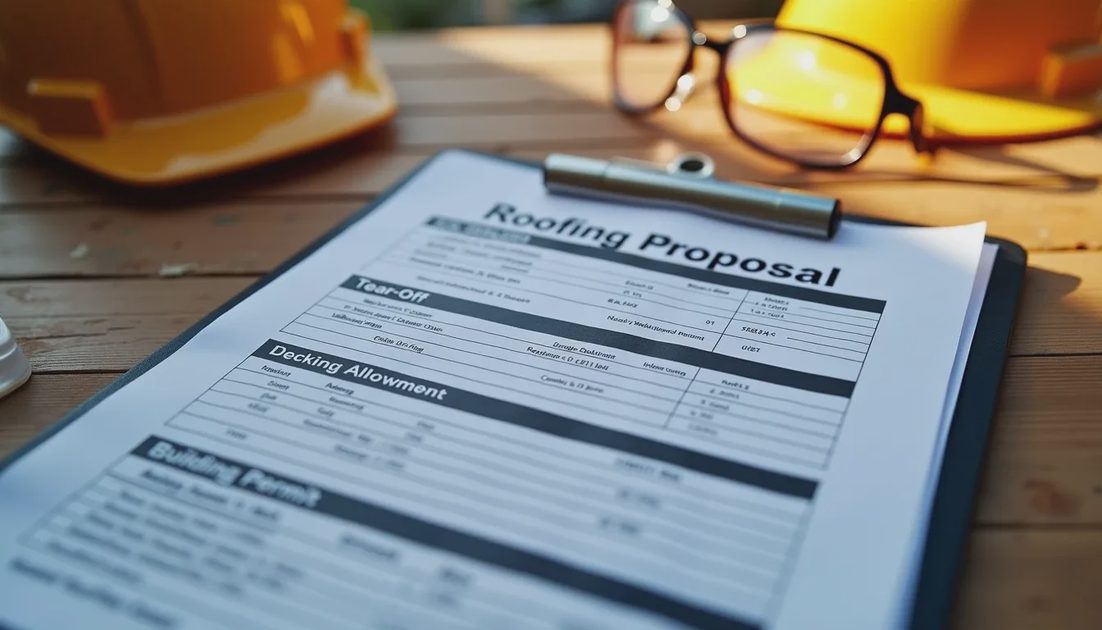
When you open a set of roofing proposals, the first number that jumps out is the total. The more useful signal sits in the details. A proposal that explicitly includes full tear-off, a clear approach to decking, and responsibility for the building permit is usually written by someone who has already thought through the actual sequence of the job. A proposal that is silent on those three items is often written to win the signature, not to finish the roof correctly.
Why Tear-Off Belongs in the Proposal
Tear-off is not optional language. It defines whether the existing roof is removed down to the deck or whether a new layer is simply placed over the old one.
What Full Tear-Off Actually Involves
A complete tear-off removes all existing roofing layers, underlayment, and usually the old drip edge and some flashing. It allows the deck to be inspected, damaged wood to be replaced, and a clean substrate to receive new underlayment and fasteners. Overlaying an existing roof can be cheaper in the short term, but it adds weight, hides soft spots, and often limits the manufacturer’s warranty. Most local codes restrict the number of layers that may remain. A proposal that simply says “reroof” without stating tear-off leaves that decision open and shifts the risk of later discovery onto the homeowner.
How Experienced Contractors Treat It
Contractors who regularly handle storm and insurance work treat tear-off as a standard line item. They specify the number of layers expected, include disposal, and plan for the labor and equipment required. When the proposal is silent or uses vague phrases such as “as needed,” the contractor may intend to overlay or to bill extra once the job is under way.
Why Decking Language Matters More Than Most Homeowners Realize
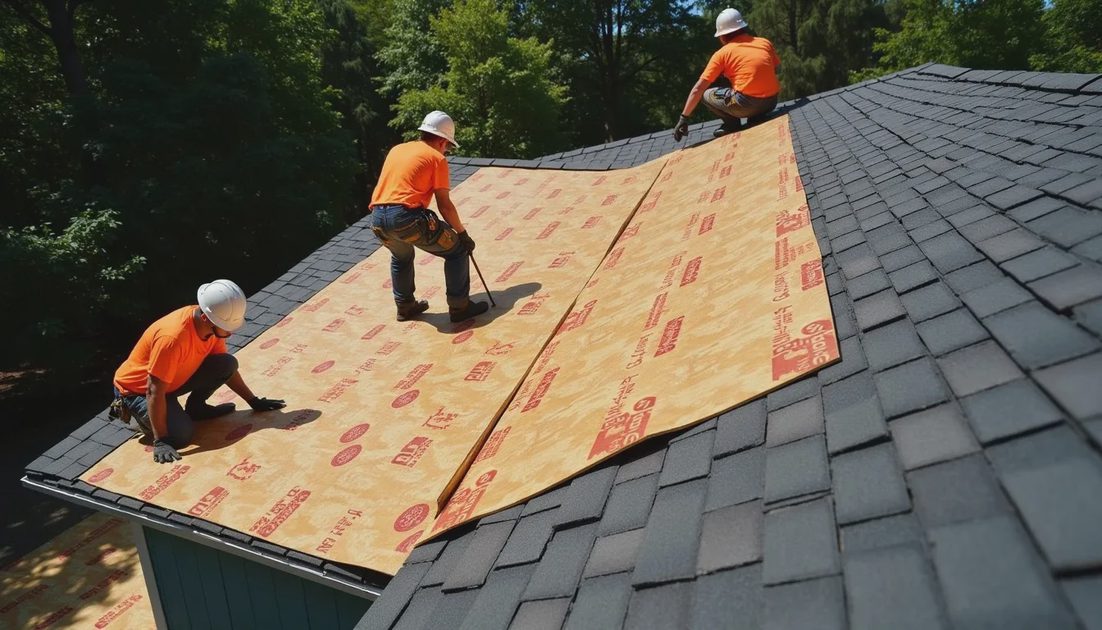
The condition of the roof deck cannot be fully known until the old covering is removed. Soft, delaminated, or water-damaged plywood is common after years of leaks or inadequate ventilation. Leaving damaged decking in place undermines the new roof from day one.
Clear Unit Pricing Versus Vague “As Needed”
A strong proposal does one of two things. It includes a realistic allowance for deck replacement based on the age and visible condition of the roof, or it states a firm unit price per sheet or per board foot so the homeowner knows the cost of any extra work before it begins. Vague language such as “decking extra if required” or “time and materials” creates a blank check. Once the old roof is gone and the job is partially complete, the homeowner has little leverage.
What the Presence of Decking Language Signals
When a contractor bothers to address decking up front, it usually means they have walked enough roofs to know that substrate problems are normal, not exceptional. They have already priced the labor and material risk into their process. A proposal that never mentions the deck is more likely written by someone who hopes the problem does not appear or who plans to treat it as a profitable surprise.
Why Permit Responsibility Is a Professional Marker
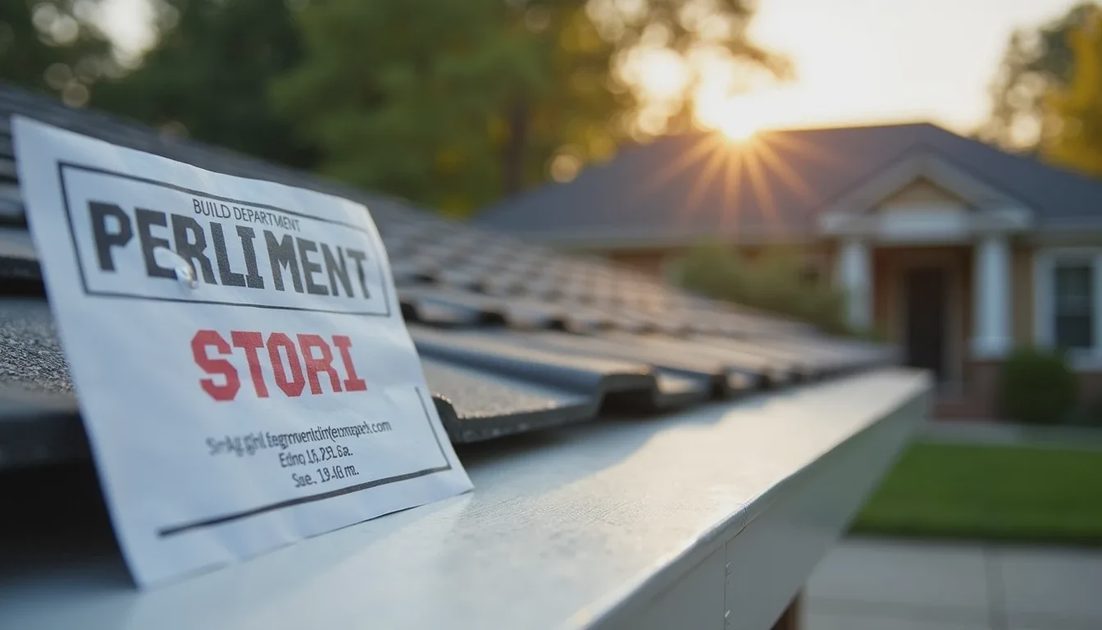
Almost every roof replacement requires a building permit. The permit triggers inspections that verify the work meets local code for fastening, underlayment, ventilation, and other details. Skipping the permit skips the inspection.
Who Should Pull the Permit
The contractor should pull the permit in the company’s name. That keeps legal responsibility for code compliance with the licensed professional. When a proposal is silent on permits, or when the contractor suggests the homeowner pull an owner-builder permit “to save money,” liability and risk are being transferred. Unpermitted work can create problems at resale, with future insurance claims, and if a later dispute arises over whether the roof was installed correctly.
What Inclusion of the Permit Signals
A proposal that lists the permit as a contractor responsibility, includes the typical fee range, and notes that final inspection will be obtained is written by someone who intends to finish the job under the same rules every other legitimate contractor must follow. It is a small line item that reveals a larger attitude toward process and accountability.
Reading the Three Items Together
Tear-off, decking, and permit are not isolated checkboxes. Together they form a short test of whether the contractor has thought through the real job rather than the sales conversation.
Item | Strong Proposal Signal | Weak Proposal Signal |
|---|---|---|
Tear-off | Explicit full removal, layers stated, disposal included | “Reroof,” “overlay possible,” or silent |
Decking | Unit price or realistic allowance stated | “As needed,” “TBD,” or never mentioned |
Permit | Contractor pulls permit and obtains inspections | Silent, or homeowner is asked to handle it |
When all three appear with clear language, the contractor is more likely to have accurate labor estimates, realistic material quantities, and a process for handling the unknowns that appear after tear-off. When all three are missing or vague, the low total price is often achieved by pushing those costs and risks onto the homeowner later.
How These Details Affect Insurance Claims
In storm claims the insurance estimate is a starting point, not a finished scope. A contractor who already includes tear-off, decking allowances, and permit costs in the proposal is better positioned to identify gaps between the carrier’s estimate and the work actually required. That documentation supports supplements when legitimate additional items are discovered. A contractor whose proposal ignores these items is more likely to accept a thin scope and then pressure the homeowner for change orders or incomplete work once the job is under way.
Practical Path Forward
When proposals arrive, look first at the language around tear-off, decking, and permits before ranking the totals. Ask every contractor the same three questions: Will the existing roof be fully removed? How is damaged decking priced? Who is responsible for the building permit and final inspection? The answers, and whether they already appear in the written proposal, usually reveal more about the quality of the eventual roof than the bottom-line number does.
A proposal that treats these three items as normal parts of the job is more likely written by a contractor who intends to complete a code-compliant, properly prepared roof. A proposal that leaves them out is more likely written to win the bid and manage the consequences later. In roofing, the details that appear before the work starts are the best early indicator of what the finished system will actually be.