The contract is signed. The deposit is paid. The crew arrives and begins tearing off the old shingles. By mid-morning the deck is exposed and the contractor walks over with a new number: several sheets of plywood are soft and must be replaced. The additional cost is often $2,000 to $4,000 or more, depending on the area and the price per sheet. The homeowner is left choosing between paying the extra amount or stopping a job that is already half-demolished.
This moment is predictable. Soft or water-damaged decking is one of the most common findings in storm and age-related roof work. What is not predictable is whether the contract already contains the language that keeps the cost controlled. When that language is missing, the discovery becomes a negotiation under pressure.
Why Decking Problems Surface Only After Tear-Off
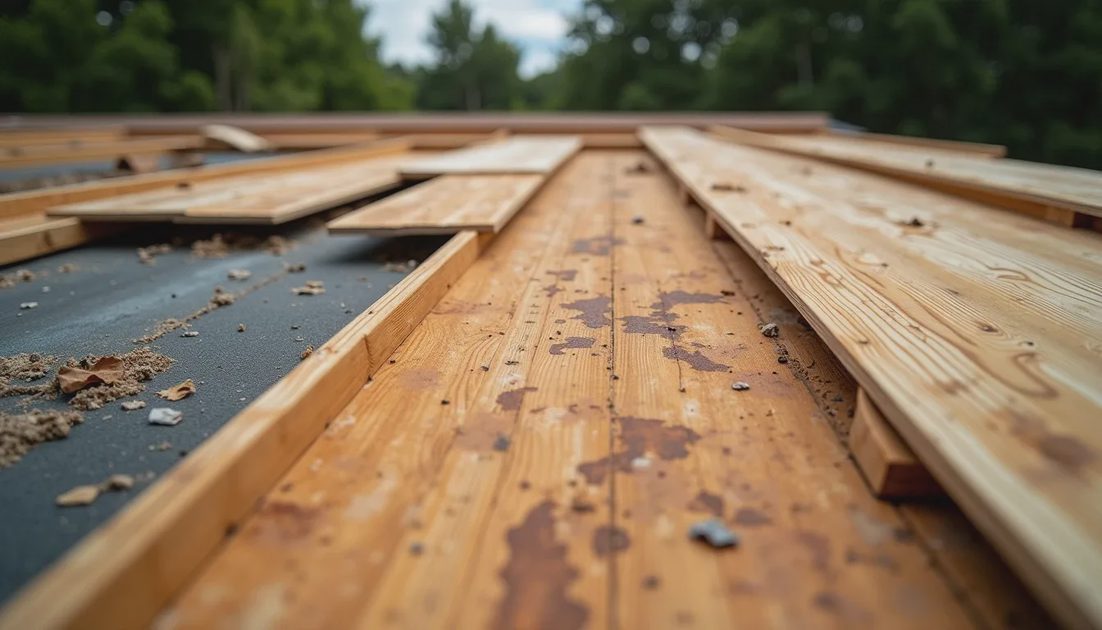
The roof covering hides the condition of the sheathing. From the attic side, only a portion of the deck is usually visible. From the exterior, nothing is visible. Moisture from long-term minor leaks, poor ventilation, or prior storm damage can soften the plywood or OSB without producing obvious symptoms on the surface. Once the shingles and underlayment are removed, the soft areas are obvious—spongy underfoot, delaminated, or darkened.
At that point the work cannot properly continue until the damaged sheets are replaced. Leaving soft decking in place undermines the new underlayment and fasteners and shortens the life of the new roof. Replacement is the correct technical step. The financial question is how that step was priced before the work began.
The Clause That Prevents the Surprise
A well-written contract addresses decking in one of two ways. It includes a stated allowance based on a realistic assumption of quantity, or—more usefully—it states a clear unit price per sheet or per board foot for any decking that must be replaced.
What the Language Should Look Like
Effective wording is simple and specific. It identifies the material (for example, ½-inch CDX plywood or OSB of specified thickness), states the installed price per sheet, and notes that actual quantities will be documented and agreed before the new decking is fastened. Some contracts also include a modest base allowance so that small quantities are already covered and only excess amounts trigger additional charges.
When this language is present, the discovery of soft decking produces a straightforward calculation rather than a new negotiation. The homeowner can see the unit price in advance, verify the quantity, and know exactly how the total will change.
What Happens When the Clause Is Missing
If the contract is silent on decking, or if it uses only vague phrases such as “repairs as needed” or “extra work at time and materials,” the contractor is free to present a new lump-sum figure once the deck is open. At that moment the homeowner has limited practical alternatives. The old roof is gone, the house is exposed, and delaying the decision risks weather damage. Most homeowners pay.
The extra amount is rarely trivial. A modest roof that needs eight to twelve sheets replaced can easily generate an additional charge of $2,500 to $4,000 once labor, material, and margin are included. Larger or more complex roofs push the number higher.
How the Missing Clause Interacts with Insurance Claims
In claim-funded work the problem has a second layer. The insurance estimate may contain little or no decking allowance. If the contractor’s contract also lacks a clear unit price, the homeowner can be caught between a carrier that has not yet approved the extra wood and a contractor who expects immediate payment to continue. The cleaner path is to have the unit price already established in the contract and to document the actual quantity with photographs so a supplement can be requested promptly. Without the pre-agreed rate, both the documentation and the negotiation become harder.
Other Clauses That Compound the Risk
The decking unit-price clause is the most common and most expensive omission, but it is not the only one that produces post-tear-off bills.
Change-Order Process
A contract that allows the contractor to proceed with extra work and bill later, without prior written approval, removes the homeowner’s ability to evaluate cost before the work is done. Requiring written authorization for any change keeps control in place.
Permit and Code Upgrades
If the contract is silent on who bears the cost of code-required upgrades discovered during the job, those items can also appear as extras. Clear assignment of responsibility prevents that ambiguity.
Payment Timing
Large deposits paid before tear-off reduce the homeowner’s leverage when extras appear. A payment schedule that keeps a meaningful percentage until completion and final inspection preserves the ability to resolve quantity and price questions while the work is still in progress.
How to Check Your Contract Before You Sign
Search the document for any mention of decking, sheathing, plywood, or OSB. If the only language is vague or if the subject is missing entirely, request a specific unit-price clause before signing. The request is reasonable and common among homeowners who have seen the problem before. Most established contractors already operate with unit pricing for decking and can insert the language without difficulty.
If a contractor resists adding a clear per-sheet price, that resistance is useful information. It suggests the extra work is intended to be priced later, under conditions more favorable to the contractor.
The time to decide what soft decking will cost is before the old roof comes off, not after the house is open to the weather.
Practical Path Forward
Treat the decking clause as a required element of any storm or full-replacement contract. Confirm that a unit price is stated, that the material is specified, and that actual quantities will be documented and acknowledged. Pair that language with a simple change-order requirement and a balanced payment schedule.
These provisions do not eliminate the possibility of extra cost. Soft decking is a real condition on many roofs. What they eliminate is the open-ended surprise that turns a known risk into an unplanned bill of several thousand dollars at the moment you are least able to negotiate. The clause is short. The cost of its absence is not.