

The request sounds reasonable at first. Materials have to be ordered. Crews have to be scheduled. A deposit secures the date. Then the number appears: 40 percent, 50 percent, sometimes more, due before any work begins. At that moment the decision is no longer about convenience. It is about who carries the risk if the relationship goes wrong.
In storm restoration and roofing, a deposit larger than roughly 30 percent of the total contract price is a reliable warning sign. It does not always mean the contractor is dishonest. It does mean the financial structure of the job has been tilted heavily toward the contractor and away from the homeowner. Once that money is transferred, the practical ability to enforce quality, timeline, or completion is sharply reduced.
Why Large Upfront Payments Create Leverage Problems
Construction is sequential. Materials arrive, tear-off begins, new components go on, inspections occur, and final details are finished. Payment that follows that sequence keeps both parties invested in finishing. Payment that jumps far ahead of the sequence creates a different dynamic.
The Homeowner’s Position After a Large Deposit
When 40 or 50 percent of the money is already gone, the homeowner’s strongest remaining tools are persuasion and the threat of legal action. Both are slow and expensive. If the crew disappears for two weeks, if the workmanship is poor, or if extras begin to multiply, the person who has already paid a large sum is negotiating from weakness. The contractor, by contrast, has already recovered a substantial portion of the job’s profit and materials cost.

The Contractor’s Incentives
Most legitimate contractors prefer steady cash flow tied to progress. They order materials as needed, pay labor as work is performed, and collect the balance when the job is accepted. A company that routinely demands large deposits often does so because it is under-capitalized, stretching deposits from one job to fund another, or simply maximizing cash on hand before performance is complete. None of those reasons benefit the homeowner.
What a Reasonable Payment Structure Looks Like
Healthy payment schedules share a few characteristics.
Modest Initial Deposit
A deposit in the range of 10 to 30 percent is common and usually sufficient to order materials and secure the schedule. In many states, consumer-protection rules limit the maximum deposit a contractor may collect on residential work. Even where no statutory cap exists, staying near or below 30 percent is a practical benchmark.
Progress Payments Tied to Visible Milestones
Subsequent payments should follow completed stages: tear-off and deck preparation, installation of underlayment and field shingles, completion of flashing and details, and final cleanup and inspection. Each payment is released only after the corresponding work is done and, ideally, after the homeowner has walked the site.
Meaningful Final Payment
Holding 10 to 20 percent until the job is fully complete, the punch list is finished, and final inspection (if required) is passed gives the homeowner a practical reason for the contractor to return and correct small items. When the entire balance is due the moment the last shingle is nailed, small deficiencies are more likely to remain unaddressed.
How Large Deposits Interact with Other Contract Weaknesses
A high upfront payment is rarely the only problem in a weak contract. It usually appears alongside other risk-shifting terms.
Vague Scope and Open-Ended Allowances
When the description of work is thin and allowances are unlimited, a large deposit means the homeowner has already funded a job whose final shape is still undefined. Extras discovered later are then collected on top of money already paid.
Weak Change-Order Language
If the contract allows the contractor to proceed with extra work and bill afterward, the combination of a large deposit and loose change-order rules leaves the homeowner with almost no practical control once the job is under way.
Limited or Missing Warranty and Insurance Details
Contractors who demand large deposits sometimes also provide incomplete insurance certificates or vague warranty language. The pattern is consistent: more risk transferred to the homeowner, less accountability retained by the contractor.
Special Considerations in Insurance-Funded Projects
When insurance is paying for the work, large deposit demands create additional friction. Carriers typically release funds in stages—often an initial actual-cash-value payment followed by recoverable depreciation after completion. A contractor who requires a large percentage before starting may be asking the homeowner to advance money that the carrier has not yet released. That advance becomes the homeowner’s problem if the claim settlement is delayed or reduced.
A cleaner approach is a payment schedule that aligns with the expected flow of insurance funds and with the physical progress of the work. The contractor still receives timely payment; the homeowner is not forced to float a large sum out of pocket beyond the deductible.
Practical Warning Signs Around Payment Terms
Beyond the raw percentage, certain behaviors amplify the risk:
Pressure to pay the deposit the same day the proposal is presented
Requests for cash, open checks, or payment to a personal account rather than a business account
Refusal to accept a staged schedule even when the homeowner offers a reasonable alternative
Lack of a written payment schedule that lists amounts and the work that must be complete before each payment
Any one of these, paired with a demand for more than 30 percent up front, is sufficient reason to pause and look elsewhere.
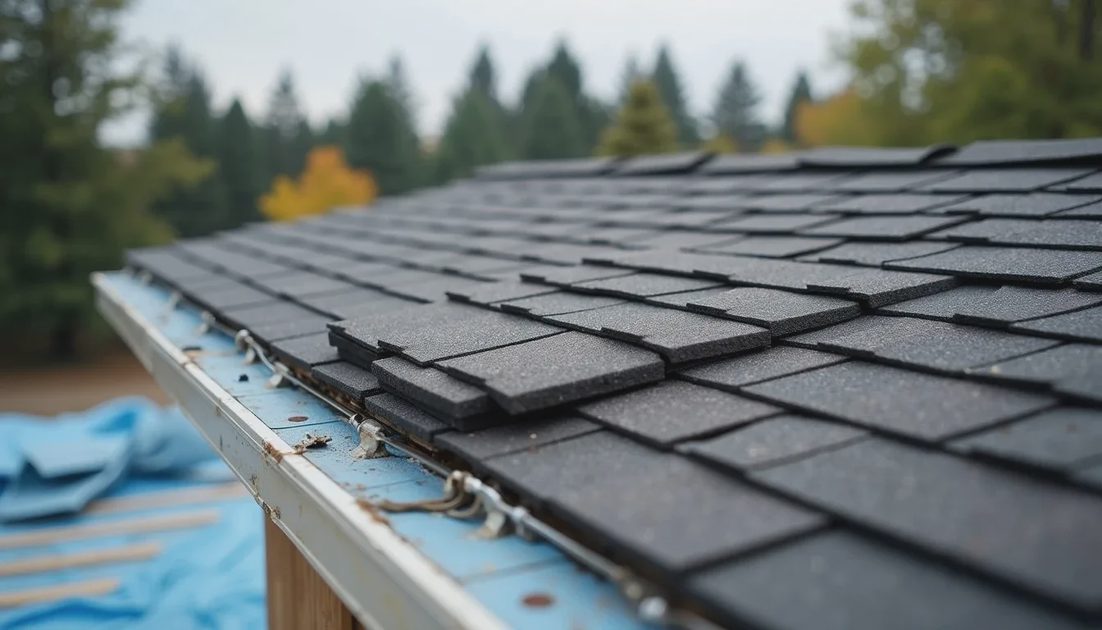
Once a large deposit has changed hands, the contractor has what he needs. The homeowner still needs the roof finished correctly.
What to Do Instead
Ask every contractor for a written payment schedule before signing. Compare the percentages and the milestones. Prefer the proposal that keeps the initial deposit modest and ties later payments to visible progress. If a contractor insists that a large upfront payment is non-negotiable, treat that insistence as information about how the rest of the relationship is likely to go.
In most markets there are capable contractors willing to work under balanced terms. The ones who will not are telling you, before any work begins, that they prefer to hold your money rather than earn it through completed performance.
Practical Path Forward
Treat the deposit percentage as a primary screening criterion. Read the payment section with the same attention you give the scope and the materials list. If the number exceeds 30 percent and the contractor will not adjust it, walk away. The short-term inconvenience of finding another proposal is almost always smaller than the long-term cost of funding a job over which you no longer have meaningful control.
A balanced payment schedule does not guarantee perfect performance. It does keep the financial incentives aligned with completion and quality. In storm restoration, that alignment is one of the most reliable protections a homeowner can build into the contract before the first shingle is removed.