

Siding damage from wind or hail often appears limited—a few cracked or dented panels on one elevation. The proposal that follows can look reassuringly simple: remove the damaged pieces, install new ones, and restore the wall. Yet many of those proposals contain the same five gaps. Homeowners miss them because the language sounds complete and the total seems reasonable. The gaps only become obvious when the work is under way or when the finished wall fails to match or to shed water properly.
Gap 1: No Clear Matching Strategy
Color and profile matching is the central problem in most siding repairs. Vinyl and other materials fade under UV exposure. Manufacturers discontinue colors and profiles regularly. A proposal that simply says “replace damaged siding” does not address whether an acceptable match exists or what happens if it does not.
Why Homeowners Miss It
The proposal shows a quantity of panels and a price. It does not state whether the existing product is still available, whether a close match has been verified, or whether the scope will expand to a full elevation if matching fails. Homeowners assume the contractor has already solved the matching question. Often the question has not been examined until material is ordered.
What Should Appear
A trustworthy proposal states the product identification, confirms current availability or the intended substitute, and explains the contingency if a reasonable visual match cannot be achieved. In many jurisdictions and under many policies, the inability to match supports expansion to the full elevation or to a logical stopping point so the finished wall has a uniform appearance.
Gap 2: Silence on Housewrap and Weather-Resistive Details
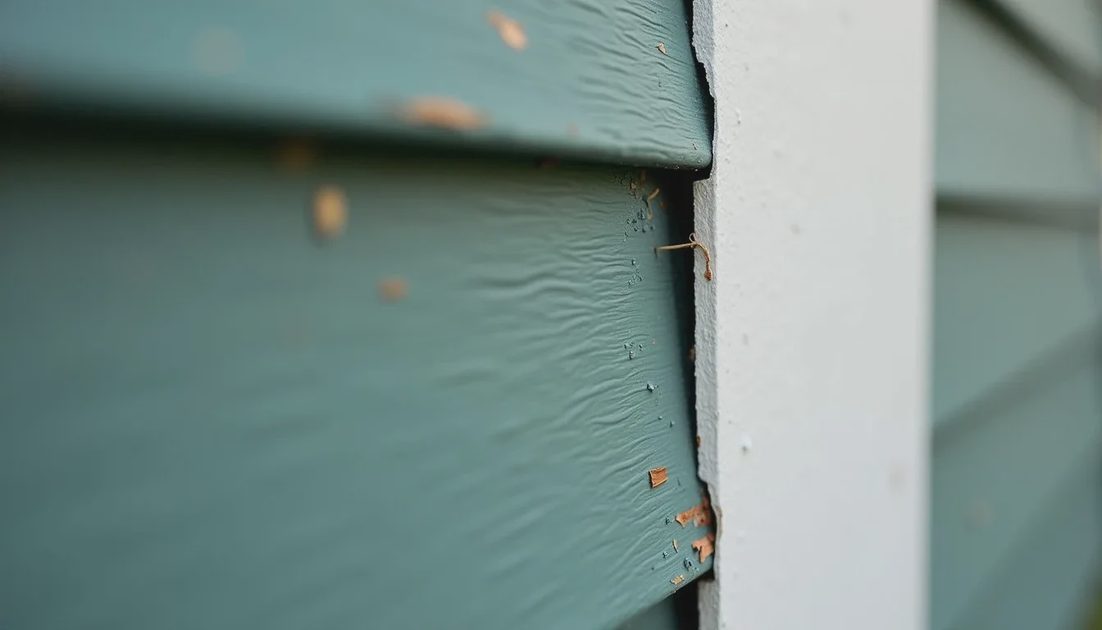
New siding installed over damaged or missing housewrap, or without proper flashing integration at windows and penetrations, leaves the wall vulnerable even though the surface looks finished.
Why Homeowners Miss It
Housewrap and flashing tape are invisible once the siding is on. Proposals frequently omit them or bury them in generic language. The homeowner sees only the panel count and assumes the weather barrier is included.
What Should Appear
The proposal should state whether the weather-resistive barrier will be repaired or replaced in the work area, how window and door penetrations will be re-flashed, and whether seam tape or equivalent detailing is included. These items are not optional upgrades; they are part of a complete exterior assembly.
Gap 3: Incomplete Trim, Accessories, and Transitions
J-channel, corner posts, starter strips, utility trim, and transitions to different materials or elevations are easy to leave out of a limited repair scope. When they are omitted, the new panels do not terminate cleanly and the finished appearance suffers.
Why Homeowners Miss It
These components are small line items. Their absence does not change the headline panel quantity. Only when the crew is on site does it become clear that proper termination and transitions were never priced.
What Should Appear
A complete proposal lists the accessory components required to integrate the new siding with existing walls, openings, and corners. If existing trim is to be reused, that assumption should be stated so it can be verified.
Gap 4: Missing Detach-and-Reset Work
To replace siding cleanly, fixtures, shutters, downspouts, light boxes, and sometimes cable or utility attachments must be removed and later reinstalled. Proposals that ignore this work leave the labor unpriced or force improvisation on site.
Why Homeowners Miss It
Detach-and-reset items feel incidental. The proposal focuses on the siding itself. The extra labor only surfaces when the crew asks who is responsible for taking down and putting back the obstacles.
What Should Appear
The document should identify significant detach-and-reset items and state whether they are included. Clear language prevents later arguments about whose labor covers the removal and reinstallation of attached elements.
Gap 5: Vague Quantities and No Verification Method
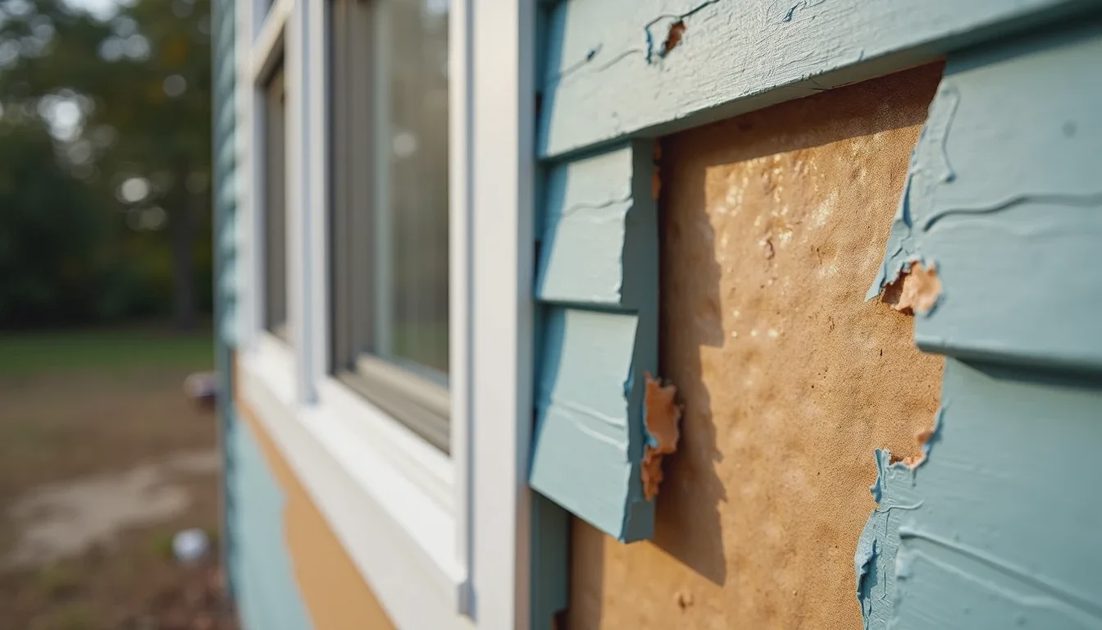
Panel counts, linear footage of trim, and square footage of housewrap are often stated as single numbers without a clear basis or a method for confirming actual quantities once the wall is open.
Why Homeowners Miss It
The total looks precise. Homeowners rarely ask how the quantity was measured or what happens if more material is required once damaged areas are fully exposed. The lack of a verification process only becomes costly when the number increases.
What Should Appear
Quantities should be tied to measurable elevations or sections. Any allowance for additional material should carry a unit price and a simple documentation method (photographs and a written count) so adjustments remain transparent.
How the Gaps Compound
Any one of these omissions can be managed. Together they produce a familiar pattern: the job begins under a limited scope, matching proves impossible or weather-barrier details are incomplete, accessories and detach work appear as extras, and the final cost or the final appearance diverges from what the homeowner expected. Because each gap seems minor in isolation, the proposal passes an initial reading.
The most expensive siding proposals are not always the ones with the highest totals. They are the ones that leave the critical decisions unstated until the wall is already open.
Practical Review Steps
When a siding repair proposal arrives, read it specifically for these five points:
Is there an explicit matching plan and contingency?
Are housewrap and flashing details addressed?
Are trim, channels, and transitions listed?
Is detach-and-reset work for fixtures and attachments included or clearly excluded?
Are quantities supported and is there a method for verifying actual amounts?
Request written clarification on any point that is missing or vague. The contractor who has already considered these issues can answer quickly. The contractor who has not will struggle to add the language, and that difficulty itself is useful information.
In insurance-funded work the same gaps often appear in the carrier’s estimate. A contractor who identifies them early can support a proper supplement rather than leaving the shortfall to the homeowner or to reduced quality. The proposal is the first place those gaps should be closed—before any panels are removed and before the opportunity for clear agreement has passed.