

Storm work almost always contains unknowns. The full condition of the roof deck, the exact amount of damaged flashing, or the state of the underlayment cannot be known with certainty until the existing covering comes off. Because of that reality, many proposals include allowances. The problem is that “allowance” is one of the most elastic words in a construction document. Used well, it protects both sides. Used poorly, it becomes the primary engine of budget creep.
What an Allowance Is Supposed to Do
An allowance is a placeholder for work that is likely but not yet quantifiable. In storm repair the most common examples are:
Replacement of damaged roof decking
Additional ice-and-water shield or underlayment once the deck is exposed
Repair or replacement of deteriorated fascia or rafter tails
Extra flashing at penetrations that prove more complex than expected
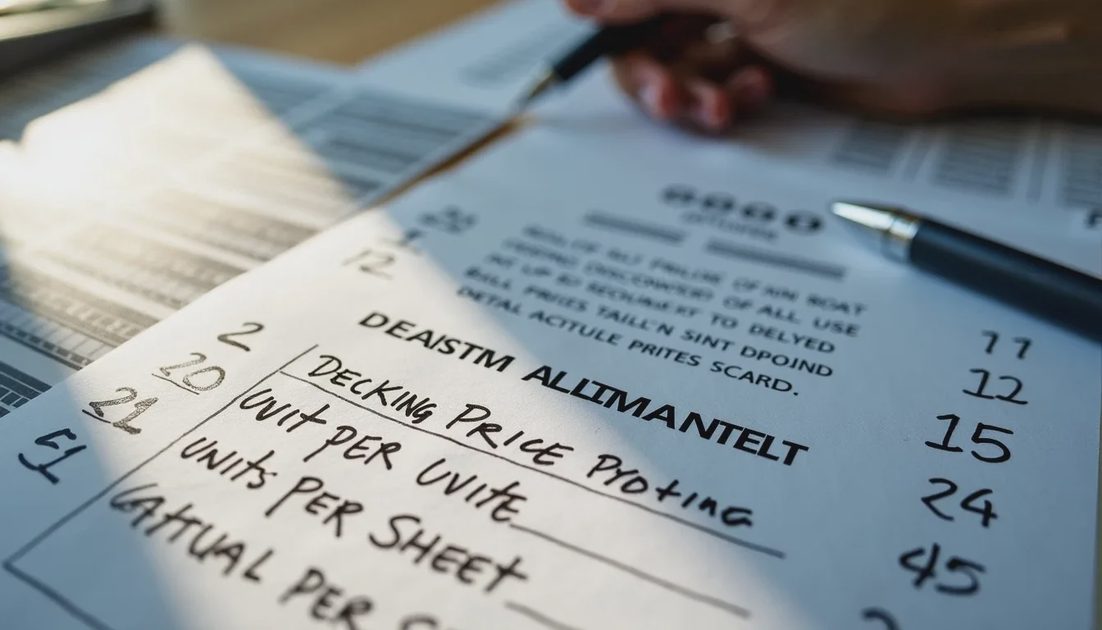
The purpose is to acknowledge the unknown without forcing the contractor to guess high or the homeowner to guess low. A properly written allowance states both a quantity assumption and a unit price. When the actual quantity is determined, the final cost is a simple multiplication, not a new negotiation.
What Makes an Allowance Reasonable
Reasonable allowances share three characteristics.
They Are Specific
“Decking allowance – $2,500” is not useful. “Decking replacement allowance – up to 10 sheets of ½-inch CDX at $85 per sheet installed” is useful. The homeowner can see the assumed quantity and the price that will apply if more or less is required. The same clarity should apply to any other allowance line.
They Are Limited
An open-ended or very large allowance invites expansion. A contractor who includes a decking allowance equal to 30 or 40 percent of the total roof area is either expecting widespread failure or building in margin. In most storm claims a more realistic starting range for decking is 5 to 15 percent of the total area, adjusted for the age of the roof and any visible soft spots from below. Larger assumptions should be explained and supported by evidence.
They Are Tied to Verification
The proposal should state how the actual quantity will be documented. Photographs of the removed decking, a simple count of sheets replaced, and acknowledgment by the homeowner or a designated representative before the new material goes down keep the process transparent. Without a verification step, the allowance becomes a one-sided adjustment.
How Budget Creep Usually Starts
Budget creep rarely arrives as one large surprise. It arrives as a series of small expansions that were never clearly priced.
A vague allowance is the most common starting point. Once the old roof is off, the contractor reports that more wood than expected needs replacement. Because the original number was not tied to a unit price, the new figure is presented as a lump sum. The homeowner has limited ability to evaluate whether the quantity or the price is reasonable. Similar expansions appear with flashing, ventilation, or “code upgrades” that were never itemized.
Payment structures that front-load the job make the problem worse. When a large percentage of the contract is already paid, the homeowner’s leverage to question later additions is reduced. A better structure keeps a meaningful portion of the payment tied to completion and final inspection.
How to Structure Allowances So They Stay Controlled
Before signing, ask for every allowance to be rewritten in unit-price form. If the contractor resists, that resistance itself is information. Most experienced storm contractors are comfortable stating a per-sheet or per-linear-foot price for the common unknowns.
Request a simple process note in the proposal:
Actual quantities will be documented with photographs and a written count.
The homeowner (or representative) will acknowledge the quantity before the new material is installed.
Any quantity above the stated allowance will be priced at the same unit rate.
Any quantity below the allowance will reduce the contract by the same unit rate.
That language turns the allowance from a potential open check into a controlled adjustment.
A reasonable allowance is a planning tool. An unlimited allowance is a transfer of risk.

Special Considerations in Insurance Claims
When the work is part of an insurance claim, allowances interact with the carrier’s estimate. If the insurance scope already includes a decking allowance or unit price, the contractor’s proposal should align with it or clearly explain any difference. If the insurance estimate contains no allowance and the contractor includes a large one, the gap will need to be addressed through a supplement before the work is complete. Leaving the issue unresolved until the end of the job creates payment disputes that slow final settlement.
Document every adjustment. Carriers generally pay for actual, verified quantities of covered damage. A clear photo record and a simple quantity log make the supplement process faster and more predictable.
Practical Path Forward
When you receive a storm repair proposal, locate every allowance line. Ask three questions of each one:
Is the assumed quantity stated?
Is a unit price given so the final cost can be calculated?
Is there a simple method for verifying the actual quantity?
If the answers are yes, the allowance is functioning as intended. If any answer is no, request revised language before you sign. The goal is not to eliminate allowances—storm work contains real unknowns—but to keep them specific, limited, and transparent so the final cost stays close to the number you originally evaluated.
Budget creep is rarely a surprise that appears out of nowhere. It is usually the result of vague language that was allowed to stand at the beginning. Tightening that language is the most effective way to keep the project on the financial path you expected.