
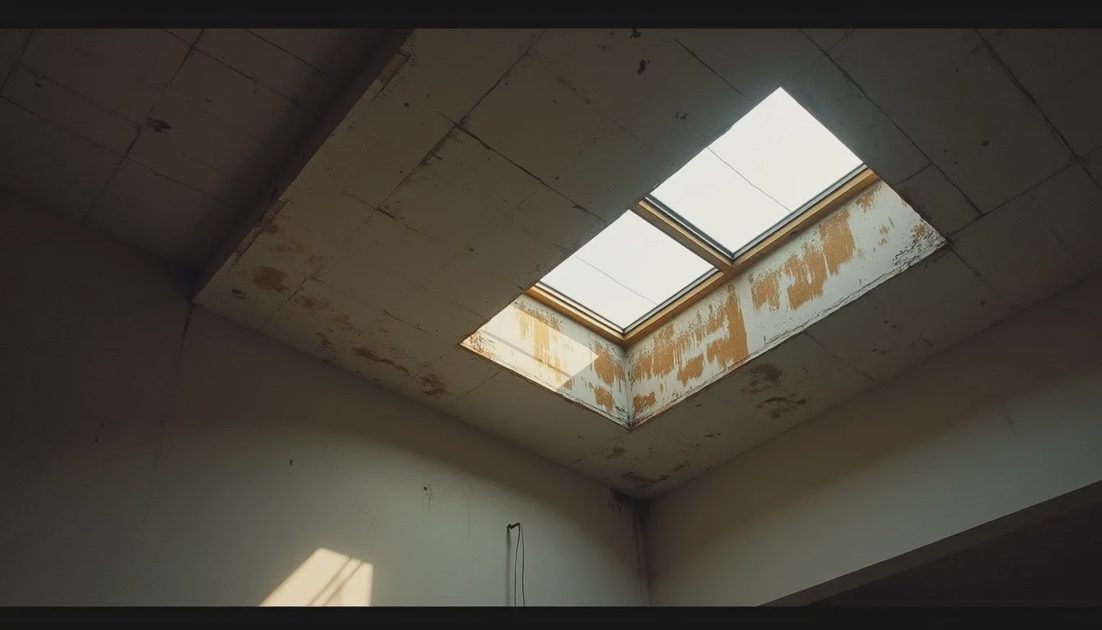
After a storm, water appears on a ceiling or runs down a wall. The instinct is to treat every interior wet spot as part of the same claim that covers the roof or siding. Sometimes that is correct. Sometimes the interior damage has a different cause, a different timeline, or a different coverage path. Mixing the two creates confusion, delays, and unnecessary disputes. Separating them cleanly keeps the storm claim focused and ensures that any independent problems are addressed on their own terms.
How Storm-Related Interior Damage Typically Appears
When the exterior envelope fails during a storm, water follows gravity and the path of least resistance. Common patterns include:
Stains or active drips directly beneath damaged roof valleys, chimneys, skylights, or penetrations
Moisture appearing on the top-floor ceiling shortly after the storm, especially on the windward side
Water tracking along rafters or trusses and showing up at interior walls or light fixtures
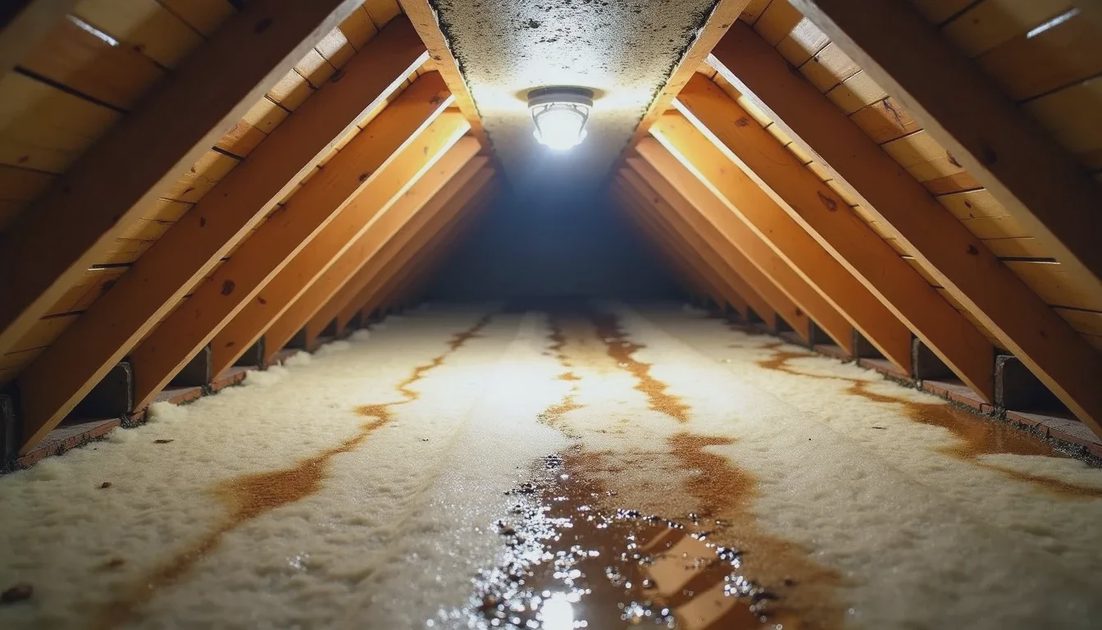
Damp insulation or staining visible on the underside of the roof deck in the attic, aligned with the exterior damage
In these cases the interior damage is a continuation of the exterior loss. It belongs in the same claim. Documentation that links the interior location to the exterior failure strengthens the file.
When Interior Water May Be a Separate Problem
Not every wet spot that appears after a storm was caused by that storm. Pre-existing conditions often become noticeable only when someone is looking carefully or when humidity and temperature change after the event.
Typical Separate Sources
Long-term minor leaks that had already stained the deck or insulation but had not yet reached the living space
Condensation from poor attic ventilation or HVAC imbalances
Plumbing leaks in walls or ceilings that coincide with the storm timeline by chance
Ice-dam damage from prior winters that left residual moisture
Window or wall flashing failures that pre-date the storm and simply continued
These issues may still require repair, but they are not automatically part of the storm claim. Treating them as storm damage can lead to denial of that portion of the claim or to disputes over depreciation and causation.
How to Evaluate the Connection
A systematic look at location, timing, and physical evidence usually clarifies the relationship.
Location Alignment
Map the interior wet areas against the exterior damage. A stain directly under a missing section of shingles or a failed chimney flashing is strong evidence of storm causation. A stain in the middle of a ceiling with no corresponding exterior defect, or beneath an area that shows no storm damage, raises the possibility of a separate source.
Timing and Appearance
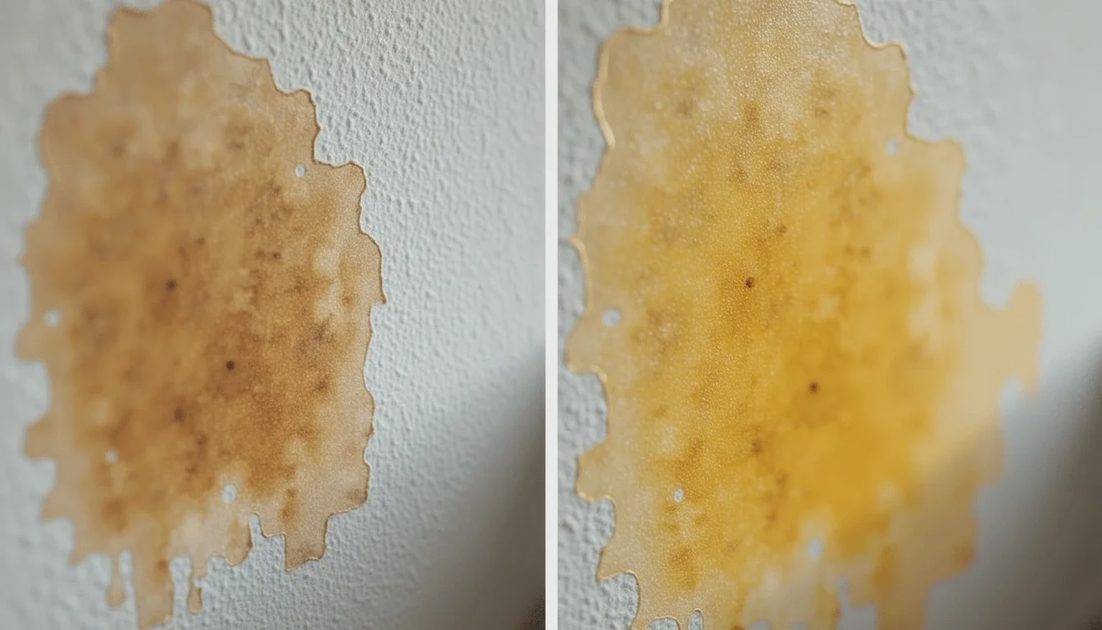
Fresh storm-related stains often have sharp edges and a clean, recent look. Older stains tend to be yellowed, fuzzy at the edges, or previously painted over. Attic evidence helps: wet or matted insulation and dark staining on the underside of the deck that aligns with a new exterior opening support a storm connection. Dry, long-stained decking above a ceiling mark suggests a prior problem.
Weather and Event Correlation
Note when the interior water first appeared relative to the storm. Water that begins during or immediately after the event, especially on elevations that took the wind or hail, supports inclusion. Water that appears days later with no ongoing exterior breach may point to condensation or a different leak path.
Documentation That Keeps the Distinction Clear
Photograph every interior wet area from wide and close views. Capture corresponding attic conditions if access is safe. Photograph the exterior roof or wall area directly above each interior location. Record the date and time the water was first noticed. Keep any temporary mitigation receipts tied to specific locations.
This record allows the adjuster and the contractor to see the physical relationship rather than relying on assumptions. It also protects the homeowner if the carrier attempts to classify clearly storm-related interior damage as pre-existing, or if a contractor attempts to fold unrelated interior work into the storm scope without justification.
How the Claim and the Repair Should Be Structured
When interior damage is clearly tied to the storm-created exterior failure, it belongs in the same claim and should be scoped as part of the restoration. Drying, insulation replacement, and drywall repair that result directly from the roof or wall breach are ordinary components of a complete storm loss.
When interior damage appears independent, it should be evaluated on its own. That may mean a separate maintenance repair, a different claim if another covered peril applies, or simply an owner-funded correction. Bundling unrelated work into the storm claim creates avoidable friction and can slow payment for the legitimate storm portion.
The goal is accuracy, not maximum bundling. Storm-caused interior damage belongs in the storm claim. Separate problems deserve their own clear path.
Practical Decision Steps
Locate every interior wet area and mark it on a simple floor plan.
Inspect the exterior and attic (safely) directly above each location.
Note the age and appearance of the staining and the condition of the deck and insulation.
Record when the water first appeared relative to the storm.
Present the aligned evidence for storm-related areas as part of the claim.
Isolate any areas that lack a clear storm connection and address them separately.
Contractors and adjusters who work this way produce cleaner scopes and fewer disputes. Homeowners who insist on the distinction avoid both under-claiming real storm damage and over-claiming unrelated conditions.
Interior water after a storm is not automatically one problem or the other. It is evidence that must be read in context—location, timing, and physical continuity with the exterior loss. Reading that evidence carefully keeps the claim accurate and ensures that every wet area is handled according to its actual cause rather than by assumption.